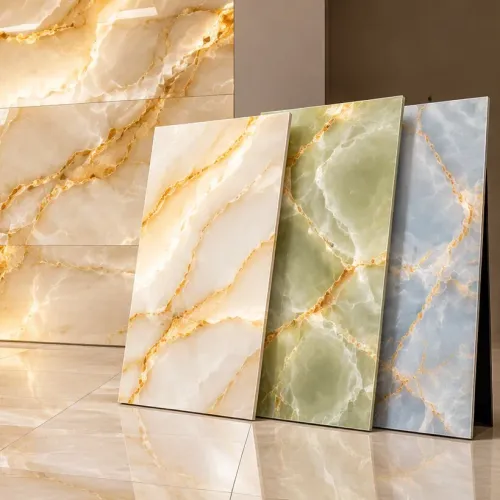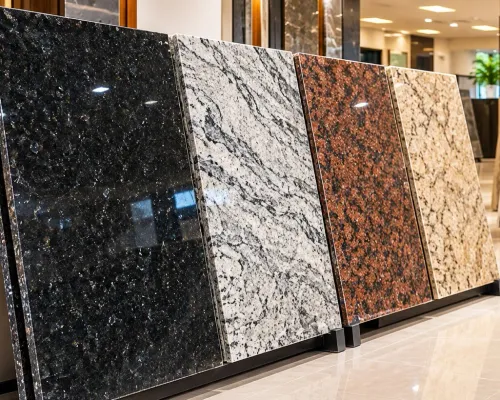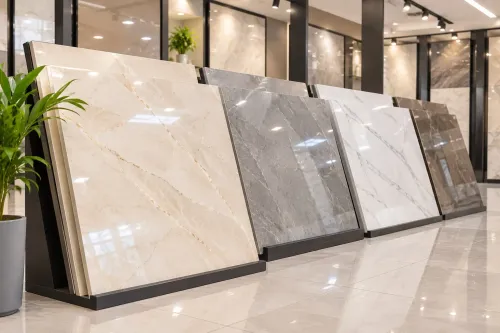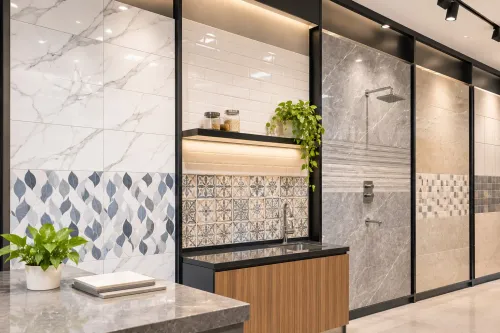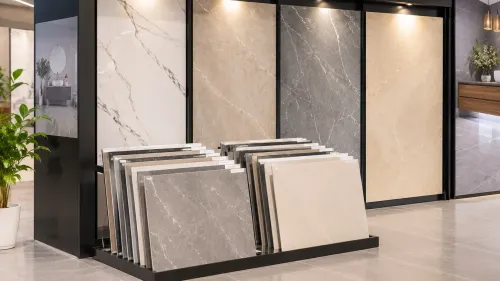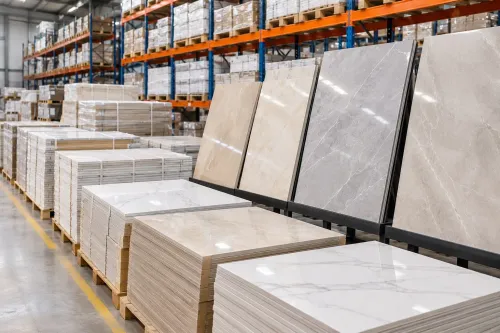
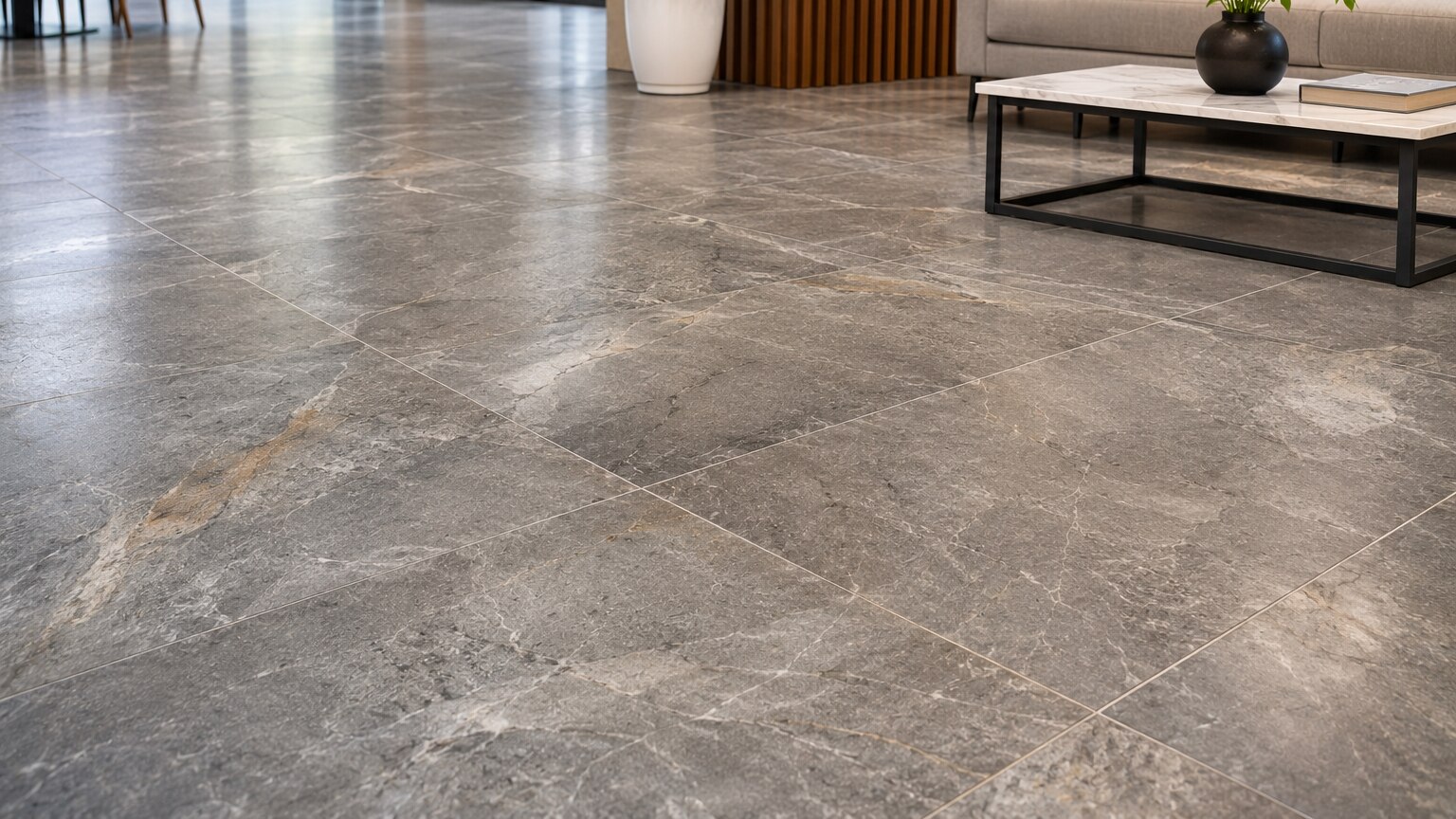
A convincing stone-look floor depends on more than a convincing showroom sample: print repetition, grout lines, surface texture, batch variation and installation quality all change the finished appearance. You will be able to compare vitrified tiles with natural stone and other flooring, match finishes to each room, calculate the order and demand the technical information needed for a durable installation.
Key takeaways
- Dry-lay tiles from several cartons to check shade and pattern repetition.
- Choose vitrified tile when you need lower maintenance than natural stone or wood.
- Match slip resistance, water absorption and finish to each room’s use.
- Confirm batch details, quantity, wastage allowance and installation requirements before ordering.
What Makes a Stone-Look Floor Appear Natural After Installation?
A natural-looking floor is judged across a planned layout, not by one attractive tile. Request tiles from several cartons, then dry-lay a representative area in the room. This reveals whether shade changes look intentional or whether the same image repeats across adjacent tiles.
- Colour variation: Compare the lightest and darkest pieces. A realistic range avoids a flat, wallpaper-like result without creating distracting patches.
- Veining and print repetition: Rotate and spread tiles before fixing them. Repeated veins, identical knots or a visible pattern cycle make a stone-look tile look artificial.
- Tile size, grout joints and texture: Large tiles reduce grout interruptions, while a joint that contrasts sharply with the surface can expose the grid. Subtle texture and edge variation support realism; excessive uniformity does not.
Check the shade code and calibre on every carton, because a replacement box can sit visibly lighter, darker or differently sized. Inspect the full face of multiple tiles for gloss, texture and edge straightness rather than judging only a small sample.
Installation determines whether the design survives across the room. The substrate must be flat, and the installer should comb mortar in one direction, collapse the ridges by sliding the tile, and back-butter where coverage demands it.
Leveling clips cannot correct an uneven base; lippage and inconsistent joints will make even a convincing stone-look tile appear fake.
When Is Stone-Look Vitrified Tile Better Than Natural Stone or Wood?
Choose stone-look vitrified tile when you want consistent appearance, low routine upkeep and predictable installation across a large area. Choose natural stone when authentic variation, repairability and material character matter more than uniformity; choose wood when warmth and underfoot comfort outweigh water and scratch concerns.
| Material | Best fit | Main trade-off |
|---|---|---|
| Vitrified stone-look tile | Kitchens, entrances, busy living rooms and commercial floors | Low absorption and consistent shade, but printed veining can repeat and grout joints remain visible |
| Granite flooring | High-traffic interiors and areas needing genuine stone character | Varieties differ in absorption; test the selected batch for staining before sealing |
| Marble flooring | Formal interiors where veining and polish are the design objective | Acidic cleaners can etch it, and polishing shows scratches and traffic wear |
| Sandstone flooring | Rustic, textured designs and suitable sheltered areas | More open texture and maintenance; a sandstone flooring comparison must include absorption and sealer requirements |
| Engineered wood or laminate | Dry bedrooms and living spaces needing warmth | Moisture, grit and standing water create swelling, scratches or edge damage |
Before choosing vitrified stone-look tile, match the product to the installation. Check water absorption, breaking strength, abrasion or PEI rating where supplied, slip resistance, finish, thickness, shade code and calibre. A polished surface suits a dry formal room, not a wet bathroom or exposed entrance.
For balconies and terraces, evaluate tile, mortar, grout, drainage, movement joints and substrate together; ASTM C1026 addresses freeze-thaw resistance. Large tiles also need a flat substrate, one-direction mortar ridges, pressed-in coverage and an installer who controls lippage. A leveling clip cannot correct a warped floor.
Match the Finish and Technical Rating to the Room
Choose the finish for the room’s worst conditions, then confirm the tile’s technical data rather than judging durability by appearance. A matt finish hides light scuffs; a honed finish offers a softer stone appearance but still needs wet-slip verification. A textured tile improves traction, yet deep texture collects soil and takes longer to clean.
| Room | Suitable finish | Specify before buying |
|---|---|---|
| Wet rooms | Matt or lightly textured | Wet-use slip classification tested for the actual footwear, slope and cleaning regime; water absorption and chemical resistance |
| Kitchens | Matt or honed | Stain and chemical resistance, adequate breaking strength, and a surface that does not trap cooking grease |
| Entrances | Matt or textured | Abrasion resistance, breaking strength and wet-slip data; avoid a surface that becomes hazardous with rain |
| Balconies and terraces | Textured matt | Exterior-rated water absorption, breaking strength, slope-compatible slip performance and resistance to weather exposure |
| Living rooms | Matt, honed or polished | Choose by maintenance tolerance; verify shade, calibre and surface variation across several cartons |
| Commercial corridors | Matt or fine texture | Traffic-appropriate wear data, breaking strength, cleanability and slip classification for the site |
The polished tile disadvantages become serious where water, dust or oil is expected: glare reveals marks, and a smooth wet surface can reduce traction. A PEI rating describes abrasion resistance mainly for glazed tile; it does not replace water-absorption, strength, chemical or slip tests.
“Vitrified” alone is not a performance grade, so request ISO 13006 or EN 14411 classification and test data, including porcelain absorption of E≤0.5% where applicable.
Check the Batch, Calculate the Quantity and Prepare the Installation
Before ordering, get the exact product code and confirm that stock shares the same shade and caliber; one display tile can hide carton-to-carton variation. Check the nominal and actual size, thickness, finish, water absorption, breaking strength, abrasion rating and PEI classification where supplied. PEI measures glazed-surface abrasion, not total floor durability.
1. Measure each floor zone separately, add 5–10% for cuts and future replacements, and allow more for diagonal layouts, herringbone patterns or many corners. Divide the required area by the actual coverage per carton, round up to full cartons, and retain spare tiles from the same batch.
2. Open cartons from several pallets or cartons and dry-lay a representative spread. Blend shade and surface variation before fixing, reject chipped or bowed pieces, and inspect veining or repeated print patterns in the room’s actual lighting.
3. Confirm that the substrate is flat, firm, clean and dry. Correct dips before laying; excessive adhesive used to compensate for an uneven slab causes lippage and weak spots. Set the joint width, use levelling clips where suitable, and continue structural movement joints through the tile finish.
4. Use the specified adhesive and grout, then respect the curing time. Seal porous natural stone when the product instructions require it, and obtain the cleaning method; acids and abrasive powders can permanently damage polished surfaces.
What to Request from a Stone Flooring Tile Dealer Before You Buy
Ask for a written submittal, not a verbal promise. When comparing options at VRINDAVAN GRANITE AND TILES in Indore, use the same tile dealer checklist for every product so an attractive display sample does not hide different performance or availability.
- Exact product code, nominal and actual size, thickness, finish, shade code and calibre, current batch number, and batch matching confirmation
- A tile technical data sheet showing water-absorption classification under ISO 13006 or EN 14411, breaking strength, abrasion or PEI rating where supplied, and slip data for wet or exterior areas
- A sample board containing tiles from multiple cartons; dry-lay them to reveal repeated printing, shade shifts and surface variation
- Recommended adhesive or mortar, grout width, substrate-flatness tolerance, coverage target, back-buttering requirements, cutting method, sealing advice and cleaning instructions
- A written installation commitment covering substrate checks, carton blending, protection after fixing, and responsibility for breakage or shade discrepancies
| Check | Vitrified tile | Natural stone |
|---|---|---|
| Performance evidence | Absorption group, strength, wear and slip data | Results for the selected granite, marble, limestone, sandstone or quartzite |
| Installation evidence | Flat substrate, coverage and movement-joint guidance | Thickness variation, bedding, sealing and edge-treatment guidance |
| Maintenance evidence | Approved cleaner and stain-response advice | Specific acid sensitivity, stain test and resealing instructions |
Treat “vitrified” as a manufacturing description, not a complete grade. The exact batch and stone species matter more than a generic claim that either option is durable.
Related products
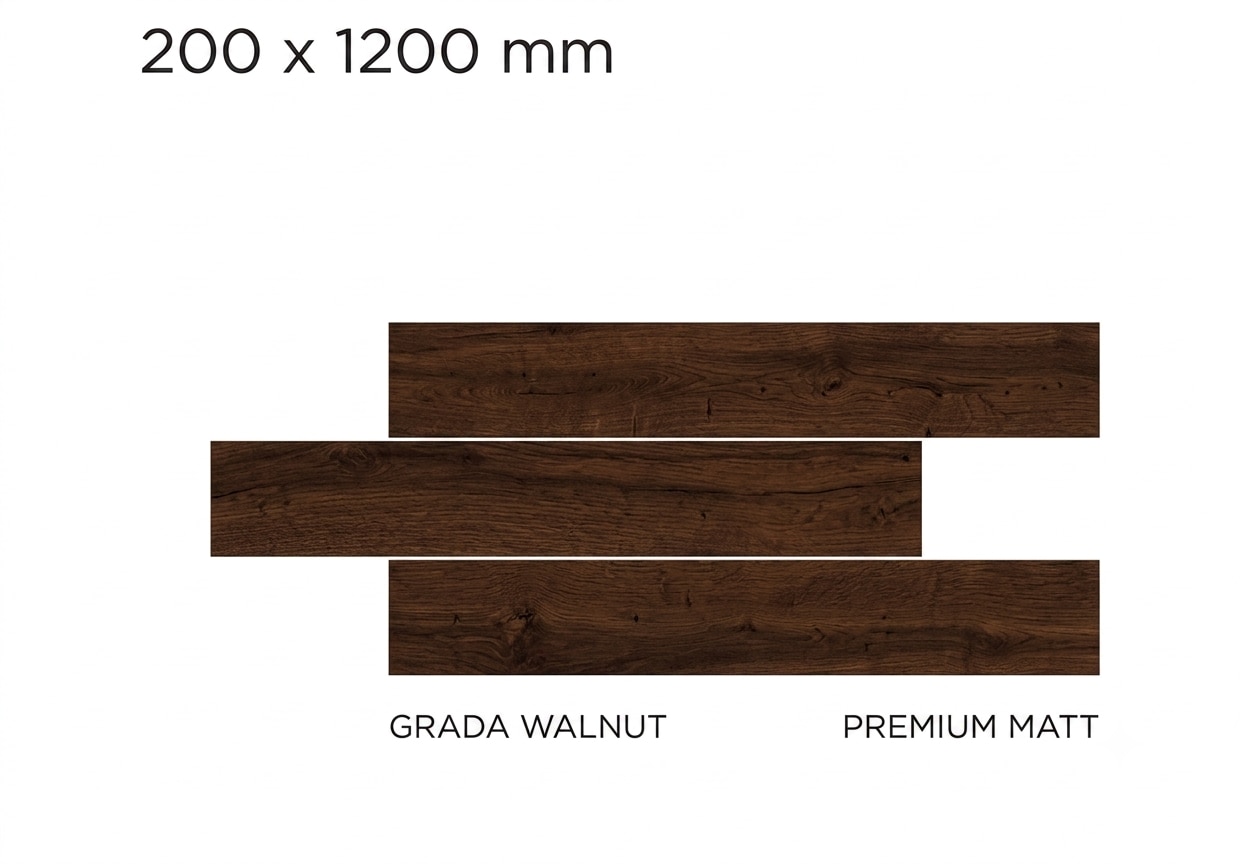 | Wood Collection (Premium Matt) – Wood Collection from VRINDAVAN GRANITE AND TILES combines the timeless elegance of natural wood with the strength and durability of... View product → |
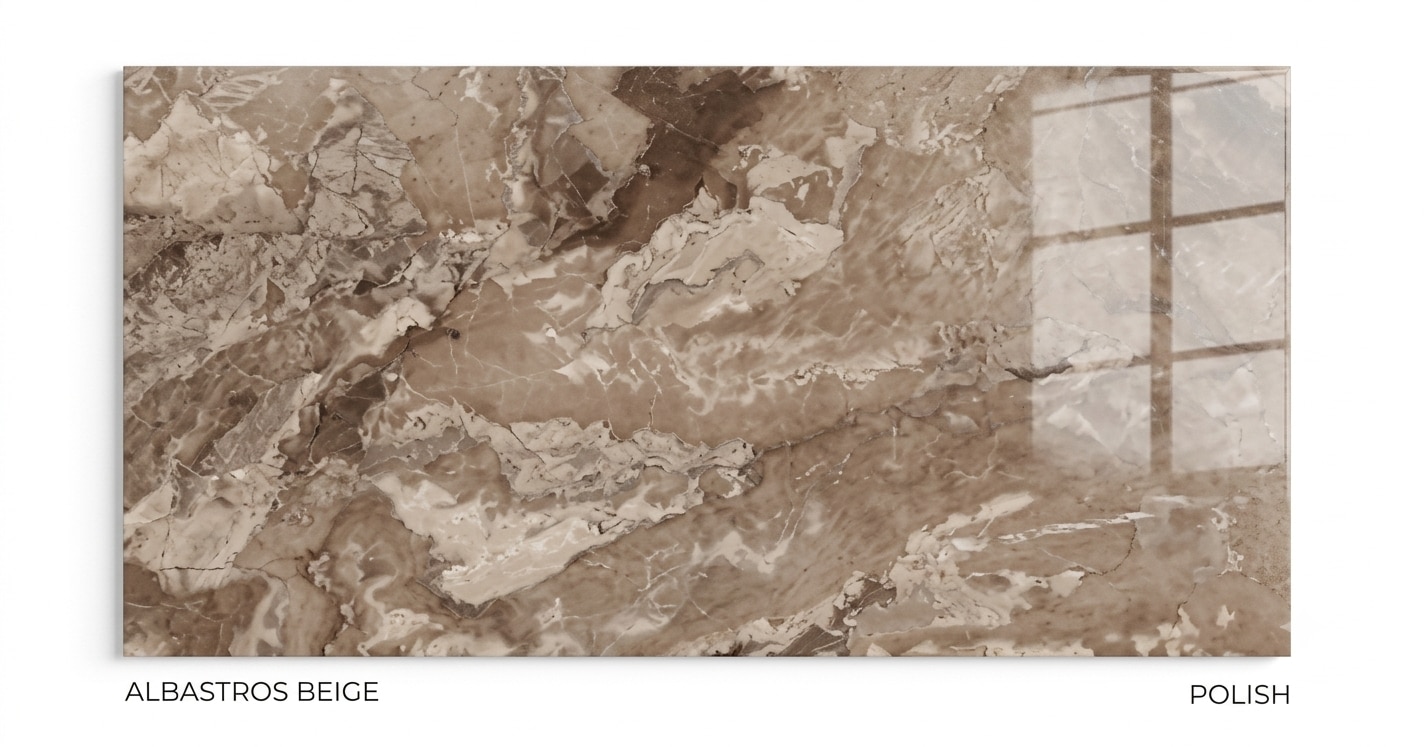 | Marble Collection Marble Collection from VRINDAVAN GRANITE AND TILES is a premium marble-finish vitrified tile that brings the timeless elegance of natural marble to... View product → |
Frequently asked questions
How can you make a stone-look floor appear natural after installation?
Request tiles from several cartons and dry-lay a representative area. Check shade variation, pattern repetition and the layout before fixing tiles.
When is stone-look vitrified tile better than natural stone or wood?
Choose stone-look vitrified tile when you want a consistent design, easier cleaning and lower routine maintenance than natural stone or wood.
Which tile finish and technical rating suit each room?
Match the surface finish and technical rating to the room’s moisture, traffic and slip risk. Bathrooms and entrances need more careful slip-resistance selection than dry bedrooms.
What should you check with a stone flooring tile dealer before buying?
Confirm the tile batch, shade, size, quantity, recommended adhesive, grout, installation method and replacement availability before placing the order.
Related products
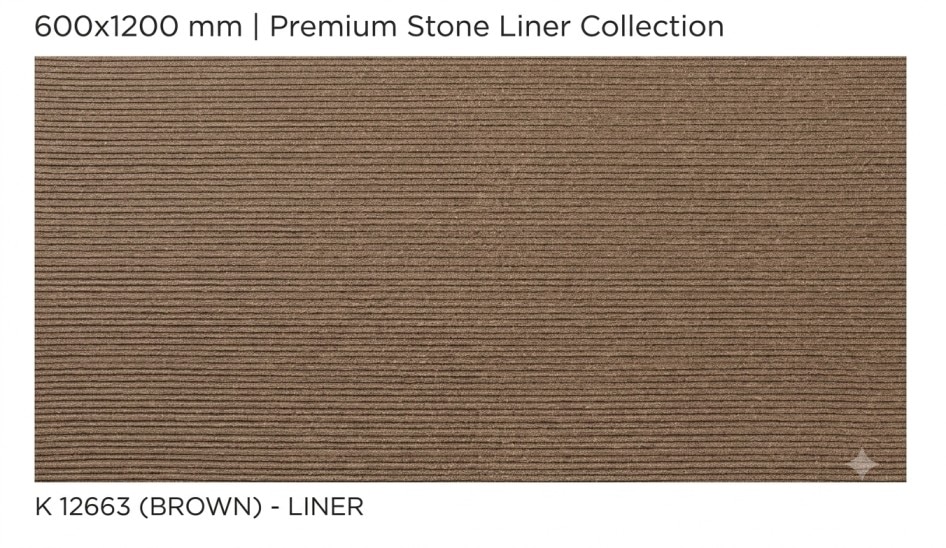 | Liner (Stone Art) K 12663 (Brown) – Liner (Stone Art) from VRINDAVAN GRANITE AND TILES is a premium stone-finish vitrified tile designed to bring the natural warmth... View product → |
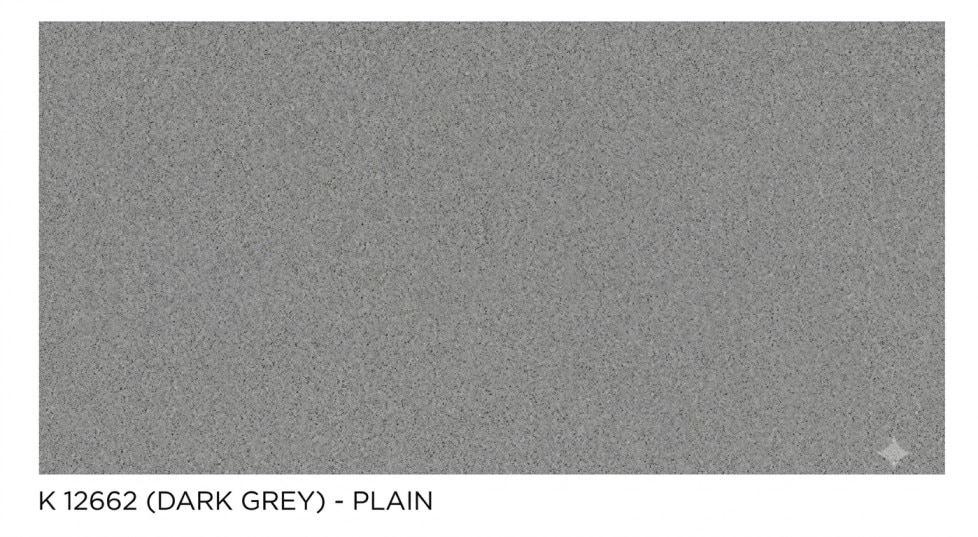 | Plain (Stone Art) K 12662 (Dark Grey) – Plain (Stone Art) from VRINDAVAN GRANITE AND TILES is a premium stone-finish vitrified tile that offers the timeless appeal of... View product → |
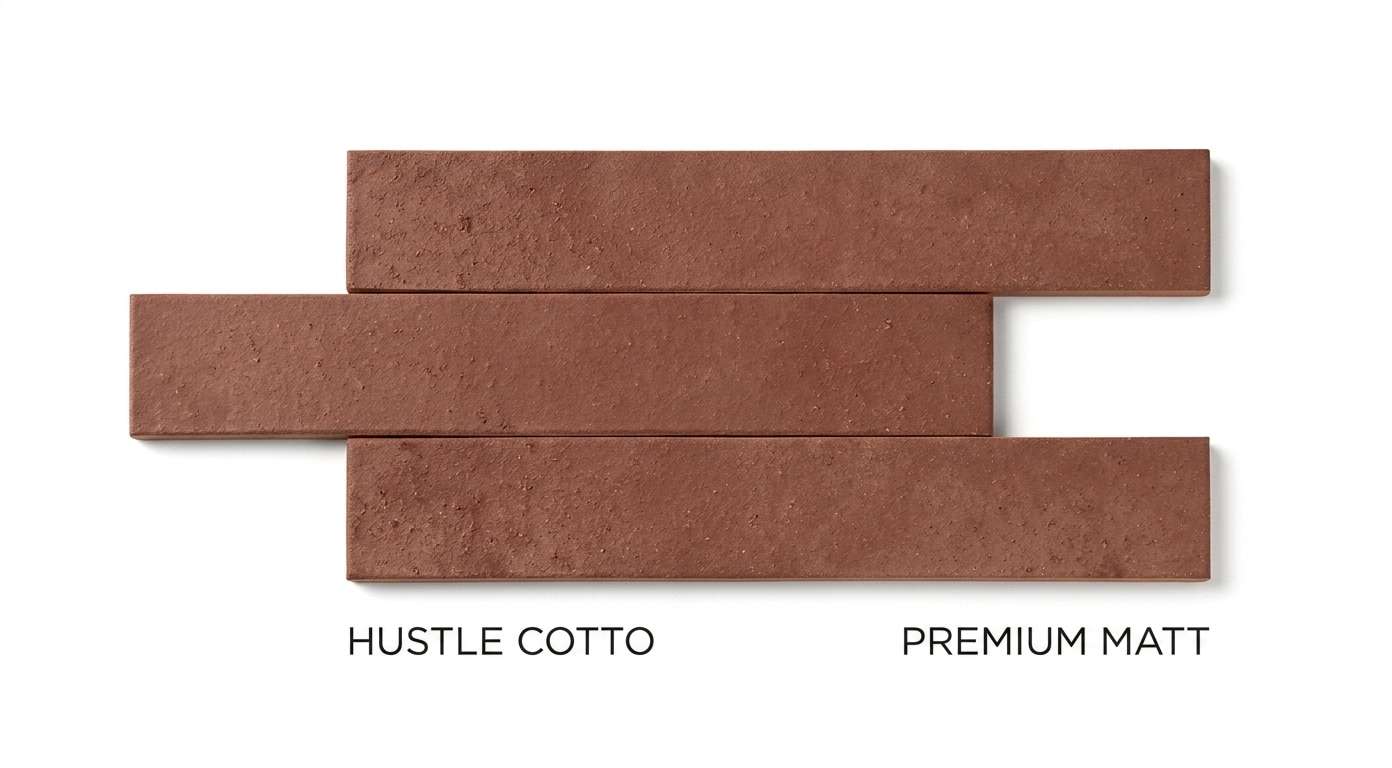 | Stone Collection (Premium Matt) – Stone Collection from VRINDAVAN GRANITE AND TILES is a premium-quality vitrified tile designed to replicate the natural beauty of... View product → |
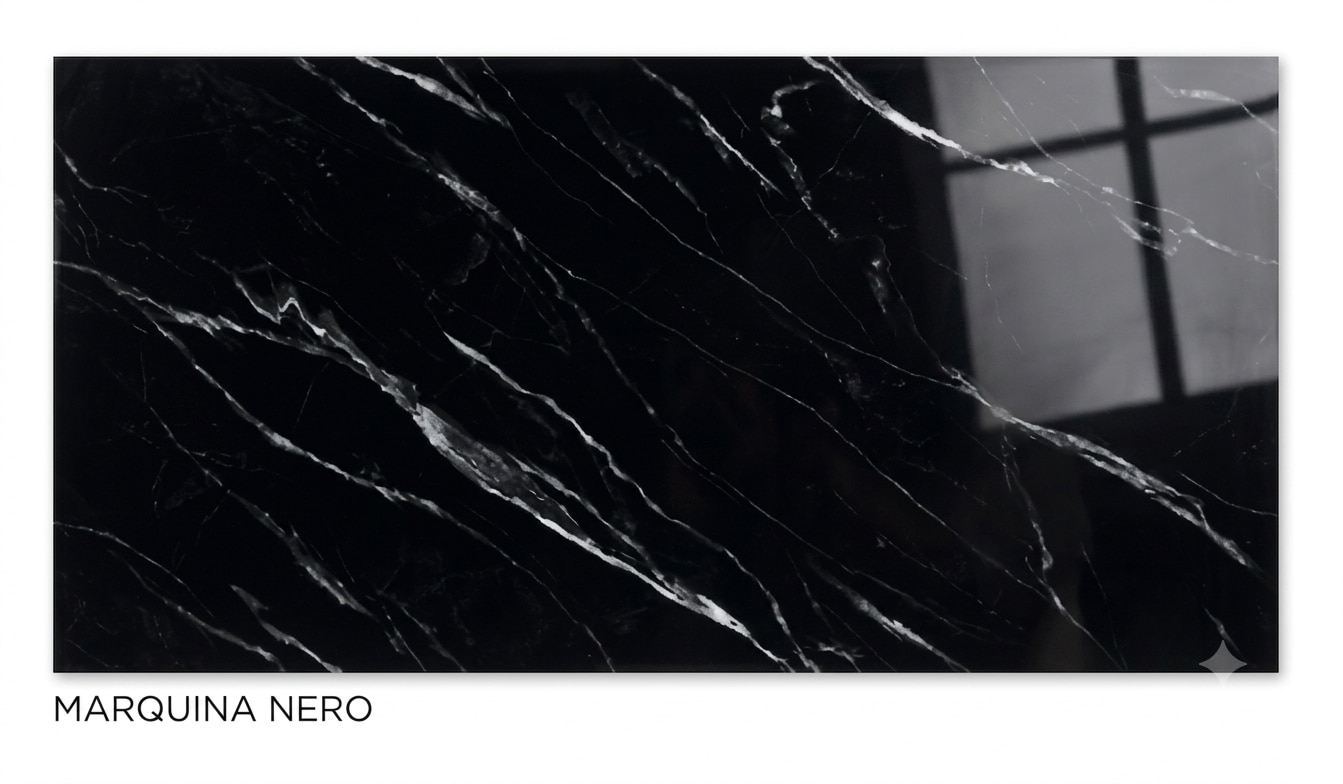 | Ornnate (Ornnate) – Dark Black from VRINDAVAN GRANITE AND TILES is a premium designer wall tile inspired by the luxurious beauty of natural black marble. View product → |